
Whole Home Water Filtration in Central Illinois & Lafayette
Filtered water at every faucet, shower, and appliance. We install whole house systems that reduce chlorine, sediment, and common contaminants where your water enters the home.
- American-made
- Licensed plumber installs
- No contracts
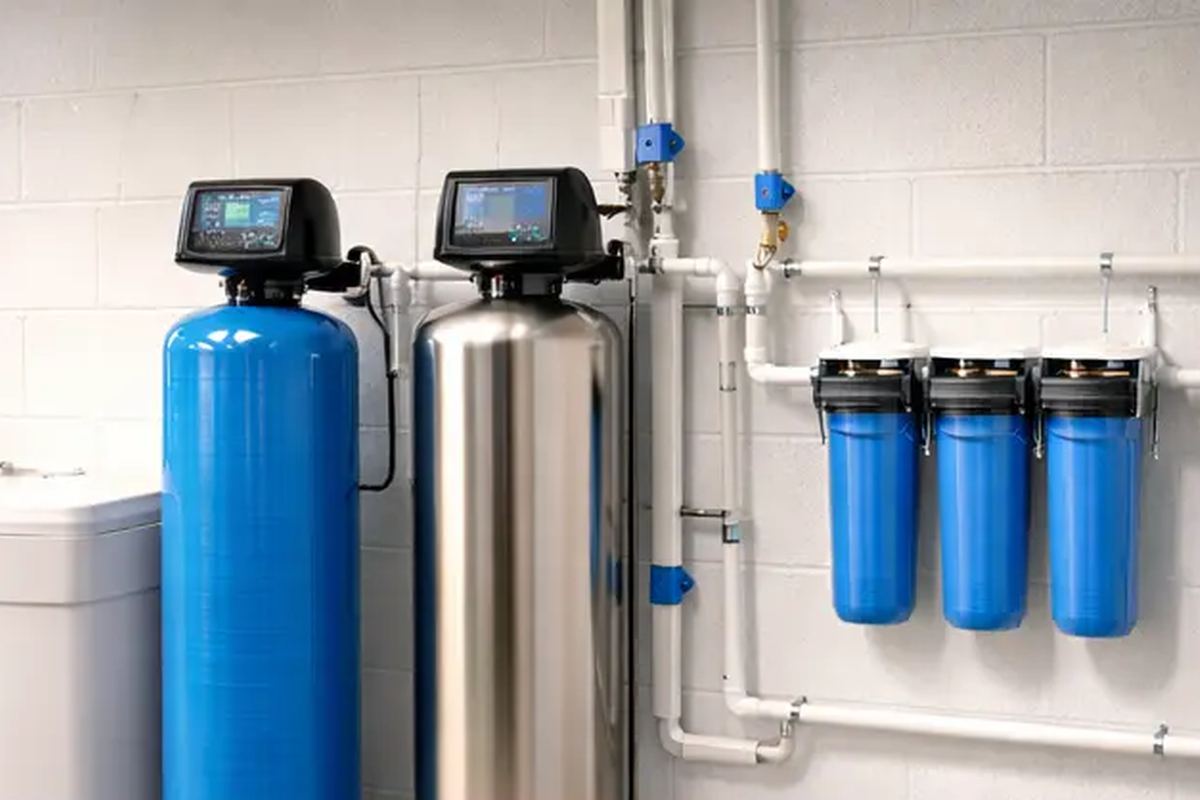
What is a whole home water filter? It is a filtration system installed on your main water line, so every tap in the house gets filtered water, not just the kitchen sink. It is the best fit when you want better water for showering, laundry, and cooking alike.
Whole Home Filtration: what to know
How whole home filtration works
Water passes through one or more filter stages before it reaches your plumbing. A sediment stage catches grit, and carbon stages reduce chlorine, chloramine, and many organic compounds that affect taste and odor. The right combination depends on your water source.
Pairing with a softener
Filtration and softening solve different problems. A filter cleans up taste, odor, and contaminants, while a softener removes hardness minerals. Many homes in our area benefit from both, installed together as one system.
Low maintenance
Depending on the system, maintenance is a periodic filter change or an automatic backwash. We'll explain exactly what your system needs before you buy.
Signs you may need this
- Chlorine smell in the showerTreated city water can smell like a pool when it heats up.
- Sediment or gritParticles that clog aerators and wear down fixtures.
- Off taste throughout the houseNot just at the kitchen sink, but every tap.
- Dry skin after showeringChlorine and other chemicals can be hard on skin and hair.
Why homeowners choose Element
- American-madeEquipment manufactured in Wisconsin, not generic imports.
- Licensed plumberEvery install done to code by a licensed plumber.
- No sales pitchFree phone consultation. No commissioned salespeople.
- No contractsUpfront pricing, and you own your system outright.
Get your free water consultation
Tell us your water source and what you're noticing. A local water specialist will call you back, usually the same day, with a clear recommendation and upfront pricing.
- No in-home sales pitch
- No obligation, no pressure
- Answers from a real person, not a call center
Request a call back
Tell us a little about your water. We'll call you back with a recommendation.
Request received
Thanks! A water specialist will call you shortly. Need us sooner? Call (217) 555-0123.
Whole Home Filtration FAQ
Will a whole home filter reduce water pressure?
A properly sized system has little effect on pressure. We size the equipment to your home's flow rate.
Do I still need a drinking water system?
A whole home filter improves water everywhere. For the highest purity drinking water, many families add a reverse osmosis system at the kitchen sink.
Does it work on well water?
Yes, but wells often need iron or sulfur removal too. We design well systems to handle everything together.
How often do filters need to be changed?
It depends on the filter type and your water. Typical schedules: sediment cartridges every 3–6 months, carbon cartridges every 6–12 months, reverse osmosis membranes every 2–5 years, UV lamps once a year, and softener salt checked monthly. We'll give you a schedule for your exact system.
What contaminants does a whole house filter remove?
It depends on the filter stages. Most systems reduce sediment, chlorine, chloramine, and many organic compounds that affect taste and odor. We match the stages to your water source.
Does a water softener count as a filtration system?
No. Softeners and filters do different jobs. A softener removes hardness. A filtration system targets sediment, chlorine and chloramine, chemicals, and other contaminants. Many homes in our area use both together.
Do whole house filters remove lead or PFAS?
Some specialized filters reduce them, but for drinking water, reverse osmosis at the kitchen sink is the most reliable option for lead, PFAS, and nitrates.
Where is a whole house filter installed?
On the main water line where it enters the home, usually in the basement or utility room, so every tap gets filtered water.
How long does installation take?
Most whole house filter installations are completed in half a day by our licensed plumber.
Will filtered water help my skin and hair?
Many people notice softer skin and hair once chlorine is removed from their shower water.
Can I install a whole house filter myself?
It involves cutting into your main water line, so most homeowners prefer a licensed plumber to make sure it's sized correctly, installed to code, and leak-free.
What size system does my home need?
Sizing is based on the number of bathrooms, people in the home, and your peak water flow. We size it so you don't lose noticeable water pressure.
Do I need a filter if I'm on city water?
City water is treated to be safe, but many families want to remove chlorine taste and odor and reduce other compounds. A whole house filter does that at every tap.
What's the difference between cartridge and tank-style filters?
Cartridge systems use replaceable filters on a regular schedule. Tank-style systems hold filter media and clean themselves, lasting longer between service. We'll recommend the best fit for your home.
Will a whole house filter protect my appliances?
Removing sediment helps protect valves, fixtures, and appliances. For scale protection, you'll also want a softener.
Is a whole house filter worth it?
If you notice chlorine smell, taste issues, or sediment at more than just the kitchen sink, a whole house system is usually the most complete and cost-effective fix.
Can one filter remove everything from my water?
No. Different technologies remove different things. Sediment filters catch sand, grit, and rust. Carbon filters remove chlorine, taste, odor, and some chemicals. Iron filters remove iron, manganese, and sulfur smell. UV systems inactivate bacteria and viruses but don't remove chemicals or minerals. Reverse osmosis reduces dissolved solids, many heavy metals, nitrates, fluoride, and PFAS. The best solution combines the right pieces for your water.
Do pitcher or refrigerator filters clean all my water?
No. They only treat the water that passes through them, usually just drinking and cooking water. They don't protect your pipes, water heater, showers, or appliances.
Whole Home Filtration near you
We install whole home filtration systems across Central Illinois and the Lafayette, Indiana area.
- Danville
- Champaign-Urbana
- Bloomington-Normal
- Lafayette
- Rantoul
- Mahomet
- Paxton & Gibson City
- Hoopeston
- Watseka
- Paris
- Covington & Attica
Other services
Water the way it should be.
Book a free consultation and get a clear recommendation with upfront pricing, usually the same day.