
Reverse Osmosis Drinking Water Systems
Clean, great-tasting drinking water from a dedicated faucet at your kitchen sink. Stop buying bottled water and get peace of mind for your family.
- American-made
- Licensed plumber installs
- No contracts
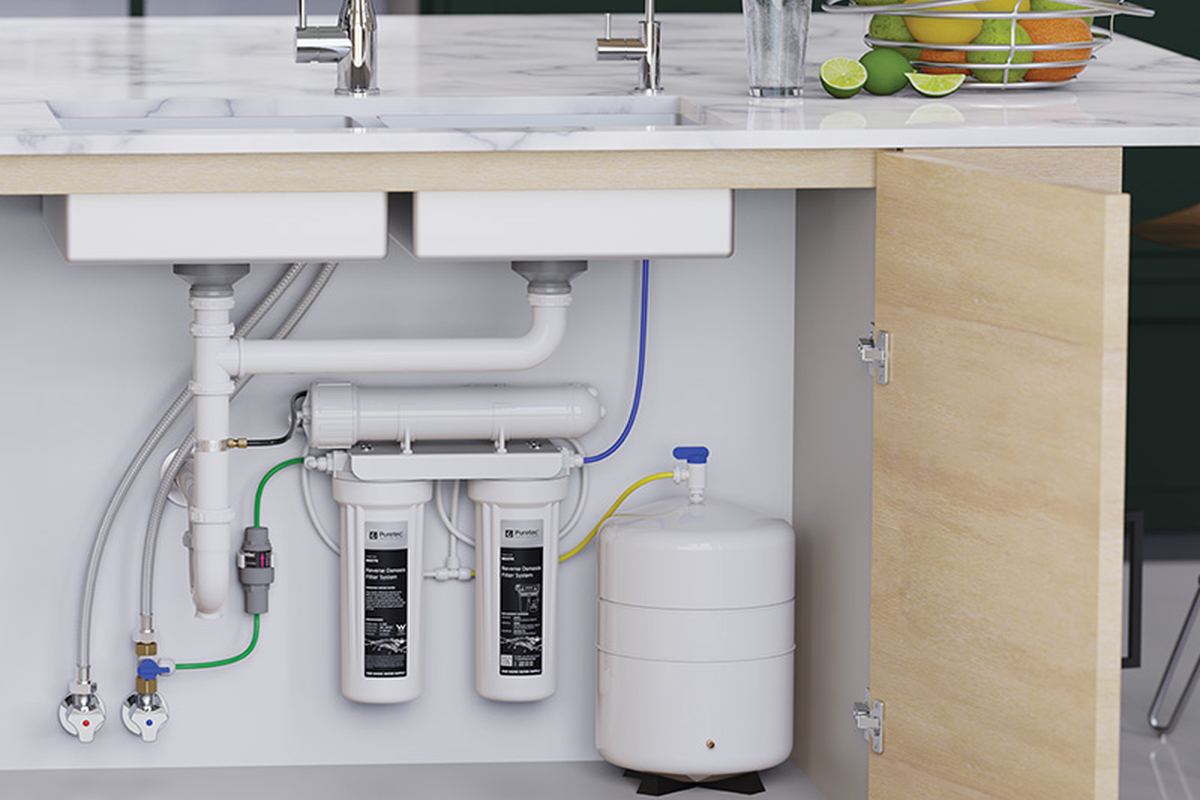
What does reverse osmosis remove? A reverse osmosis system pushes water through a very fine membrane that greatly reduces dissolved solids, nitrates, lead, arsenic, PFAS, and many other contaminants. It is the most thorough drinking water treatment for a home.
Reverse Osmosis: what to know
How reverse osmosis works
Water first passes through sediment and carbon pre-filters, then through the reverse osmosis membrane, which separates out dissolved contaminants. Clean water is stored in a small tank under the sink and passes through a final polishing filter on its way to its own faucet.
Fits under your sink
The system mounts inside your kitchen cabinet and uses a dedicated faucet next to your main one. A connection to your refrigerator's water and ice maker can often be added.
Ideal for well water
For wells, reverse osmosis is one of the most effective ways to reduce nitrates and arsenic in drinking water. We recommend a certified lab test so the system matches your results.
Signs you may need this
- Buying bottled waterA reverse osmosis system costs less over time and cuts plastic waste.
- Concerns about nitrates or arsenicCommon worries for well owners in farm country.
- High dissolved solidsWater that tastes salty, metallic, or flat.
- Babies or health-conscious householdsFamilies who want the cleanest possible drinking water.
Why homeowners choose Element
- American-madeEquipment manufactured in Wisconsin, not generic imports.
- Licensed plumberEvery install done to code by a licensed plumber.
- No sales pitchFree phone consultation. No commissioned salespeople.
- No contractsUpfront pricing, and you own your system outright.
Get your free water consultation
Tell us your water source and what you're noticing. A local water specialist will call you back, usually the same day, with a clear recommendation and upfront pricing.
- No in-home sales pitch
- No obligation, no pressure
- Answers from a real person, not a call center
Request a call back
Tell us a little about your water. We'll call you back with a recommendation.
Request received
Thanks! A water specialist will call you shortly. Need us sooner? Call (217) 555-0123.
Reverse Osmosis FAQ
Does reverse osmosis remove minerals?
Yes, it reduces most dissolved minerals along with contaminants. Remineralization filters can be added if you prefer the taste.
How often are filters changed?
Pre-filters are typically changed about once a year, and the membrane every few years, depending on your water.
Does reverse osmosis waste water?
Some water is used to rinse the membrane. Modern systems are far more efficient than older designs.
Can it connect to my fridge?
Often, yes. We can usually run a line to your refrigerator's water and ice maker.
Do I need a remineralization filter after reverse osmosis for my health?
For most people, no. Remineralization is often sold as a health necessity, but you get the vast majority of your calcium and magnesium from food, not drinking water. Adding minerals back after reverse osmosis is mainly about taste, since some people prefer a slightly fuller flavor. We're happy to add a remineralization stage if you like the taste, but we won't tell you it's required. If you have specific health concerns, talk with your doctor.
What is reverse osmosis?
Reverse osmosis is a filtration process that pushes water through a very fine membrane, separating out dissolved solids and many contaminants. The result is very clean drinking water.
Is reverse osmosis water safe to drink?
Yes. It's among the cleanest drinking water you can get at home and is widely used for drinking and cooking.
Does reverse osmosis remove nitrates?
Yes. Reverse osmosis is one of the most effective home treatments for reducing nitrates, a common concern for wells near farm fields.
Does reverse osmosis remove arsenic?
Reverse osmosis effectively reduces many forms of arsenic. Since arsenic varies by well, we recommend a certified lab test so the system matches your results.
Does reverse osmosis remove PFAS and lead?
Reverse osmosis systems are among the most effective home options for reducing lead and PFAS in drinking water.
How much space does an under-sink system need?
A typical system fits in a standard kitchen sink cabinet, including the filter housings and a small storage tank.
Do I need a separate faucet?
Most systems use their own small faucet mounted next to your main kitchen faucet. We'll install it as part of your system.
Should I get reverse osmosis if I'm on well water?
Many well owners do, especially if nitrates, arsenic, or high dissolved solids are a concern. Well water may need iron or sediment treatment first to protect the membrane.
Should I use reverse osmosis with a water softener?
Yes. A softener protects the reverse osmosis membrane from scale and helps it last longer, and the RO system removes the small amount of sodium the softener adds.
How long does a reverse osmosis membrane last?
Membranes often last several years, depending on your water quality and use. Pre-filters are typically replaced about once a year.
Is reverse osmosis water good for babies?
Many parents use RO water for mixing formula. If you're on a well, test for nitrates first, since they're a particular concern for infants.
Will reverse osmosis save me money on bottled water?
For most families, yes. After the initial install, the cost per gallon is far lower than buying bottled water.
Reverse Osmosis near you
We install reverse osmosis systems across Central Illinois and the Lafayette, Indiana area.
- Danville
- Champaign-Urbana
- Bloomington-Normal
- Lafayette
- Rantoul
- Mahomet
- Paxton & Gibson City
- Hoopeston
- Watseka
- Paris
- Covington & Attica
Other services
Water the way it should be.
Book a free consultation and get a clear recommendation with upfront pricing, usually the same day.